HHS Announces New Actions on Vaccine Injury
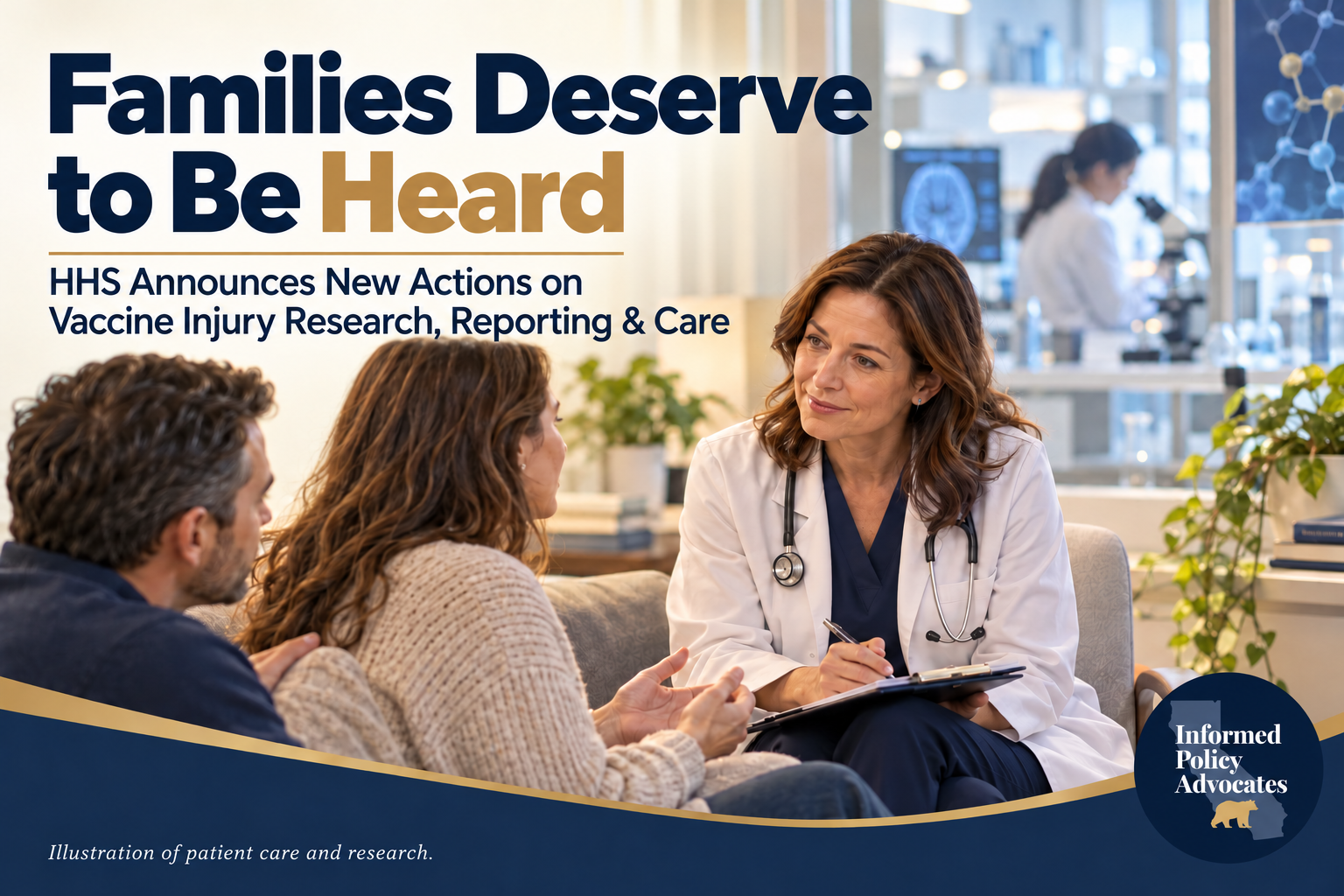
When a parent reports a serious change in their child’s health following vaccination, they deserve a doctor who listens, a thorough evaluation, and help finding answers. The same is true for adults seeking care for themselves.
That call to listen is gaining attention at the federal level.
On October 8, 2026, the U.S. Department of Health and Human Services announced new actions under Secretary Robert F. Kennedy Jr. focused on vaccine injury research, reporting, and patient care.
For families who have struggled to have their concerns taken seriously, this announcement offers reason for hope. What matters now is whether these efforts bring answers and care to the people who need them.
HHS Takes Steps Toward Research and Care
According to the HHS announcement, the actions include:
A new NIH clinic, which opened October 5 in Bethesda, Maryland, to study and care for patients experiencing health problems following vaccination.
A proposal to reimburse physicians for time spent reporting suspected vaccine injuries to the Vaccine Adverse Event Reporting System, known as VAERS.
Requirements for electronic health records to capture vaccine adverse events so that information can follow patients between providers.
Updates to VAERS to make reporting easier and improve tools for investigating possible safety concerns.
The clinic is open. Physician reimbursement is still a proposal.
Families Need Answers and Care
An illness or health change following vaccination does not automatically establish that a vaccine caused it. Determining the cause requires medical evaluation and research. VAERS accepts reports even when the cause is uncertain, helping researchers identify patterns that warrant a closer look. Learn more about VAERS and reporting.
Families should be able to describe what happened, have it accurately documented, and ask questions without being dismissed. They also need care while those questions are being investigated.
California Families Deserve the Same Attention
IPA’s work for informed consent, consumer protections, and civil rights starts with the people affected by medical decisions and public policy.
Informed consent depends on honest conversations about benefits, risks, and uncertainties. Consumer protections depend on taking reports of harm seriously and investigating them. Physicians need room to evaluate each patient’s medical history and make recommendations based on that person’s needs.
For California families, these principles matter in the doctor’s office, at school, and when policies affect access to care and education.
IPA welcomes the federal attention to vaccine injury research and patient care. We will be watching how these efforts develop, who can access the clinic, and whether the research leads to better care.
Listening is a beginning. Families need answers, support, and a healthcare system willing to help them.